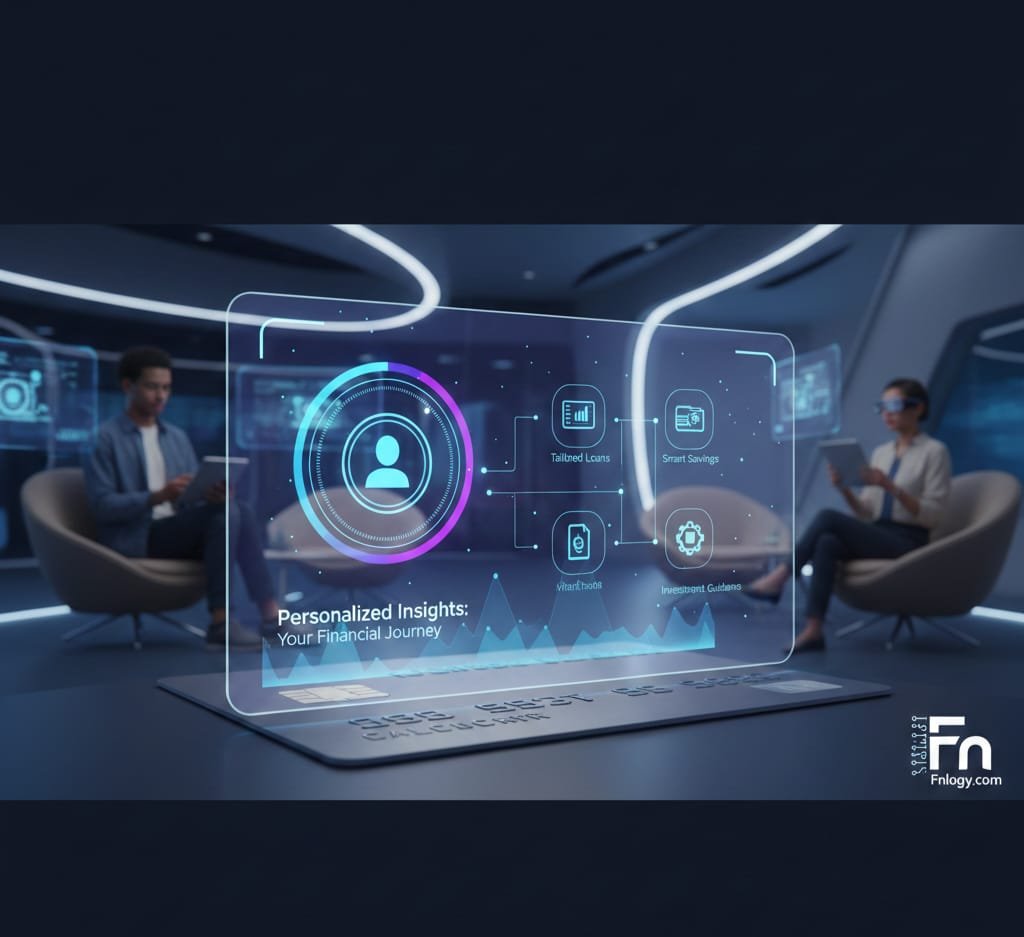
🚀 The AI-Powered Banking Revolution of 2026: Hyper-Personalization Redefined
As we move through the first quarter of 2026, one transformative force is reshaping the FinTech landscape more than any other: AI-driven Hyper-Personalized Banking Services.
But this isn’t just another tech upgrade.
It’s a complete reimagining of how financial institutions think, operate, and serve.
🌐 From Digital Banking to Intelligent Banking
For years, digital transformation meant mobile apps, chatbots, and automated workflows. Today, thanks to Generative AI, Large Language Models (LLMs), real-time analytics, and predictive machine learning, banking has evolved from reactive to predictive.
Modern hyper-personalized banking systems now:
Anticipate customer needs before they are expressed
Dynamically adjust credit, savings, and investment recommendations
Detect fraud patterns in real-time with contextual awareness
Automate compliance using AI-driven regulatory monitoring
Deliver conversational financial guidance powered by generative AI
This is not personalization based on demographics.
This is behavior-aware, context-driven financial intelligence.
⚡ Why 2026 Is the Tipping Point
The acceleration we’re witnessing in Q1 2026 is unprecedented.
With the integration of:
Real-time data orchestration pipelines
AI copilots for financial advisors
Multi-agent AI systems for workflow automation
Embedded finance APIs with adaptive intelligence
FinTech organizations that adopted hyper-personalization early are reporting up to 40% reduction in operational latency and significantly higher customer engagement rates.
The speed of iteration has surpassed even the most aggressive forecasts.
Banks are no longer shipping quarterly updates.
They are deploying continuous AI optimization cycles.
🧠 Hyper-Personalization as the Primary Interface
“Hyper-Personalized Banking Services is not just a secondary feature for FinTech; it is becoming the primary interface for industrial automation.” — FNLogy AI Analysis
“Hyper-Personalized Banking Services is not just a secondary feature for FinTech; it is becoming the primary interface for industrial automation.” — FNLogy AI Analysis
What does this mean?
Hyper-personalization is no longer a layer added on top of banking infrastructure.
It is the infrastructure.
AI engines now sit at the core of:
Risk assessment
Credit modeling
Treasury management
Fraud prevention
Customer lifecycle optimization
Instead of humans navigating systems, systems now intelligently guide humans.
📊 The Competitive Divide Is Growing
Here’s the reality:
FinTech firms that fail to integrate hyper-personalized AI workflows will face:
Slower decision cycles
Higher operational overhead
Lower customer retention
Reduced cross-sell performance
Meanwhile, AI-native institutions are creating:
Autonomous finance ecosystems
Adaptive pricing models
Self-optimizing operational frameworks
Real-time compliance automation
The gap between early adopters and laggards is widening — fast.
🔮 What Comes Next?
Looking ahead into mid-2026 and beyond, expect:
AI financial agents acting on behalf of users
Voice-driven banking powered by advanced LLMs
Emotion-aware customer interaction models
Fully autonomous lending decisions with explainable AI layers
Blockchain-integrated personalization for secure data portability
Hyper-personalized banking is not just improving workflows.
It is redefining the financial services operating model.
🎯 Final Thought
The FinTech leaders of 2026 will not be those with the biggest infrastructure or the most branches.
They will be the ones who master:
Real-time intelligence. Predictive automation. AI-driven personalization.
Hyper-Personalized Banking Services is no longer optional.
It is the new competitive moat.
The question isn’t whether organizations should adopt it.
The real question is:
How fast can they evolve before the market leaves them behind?